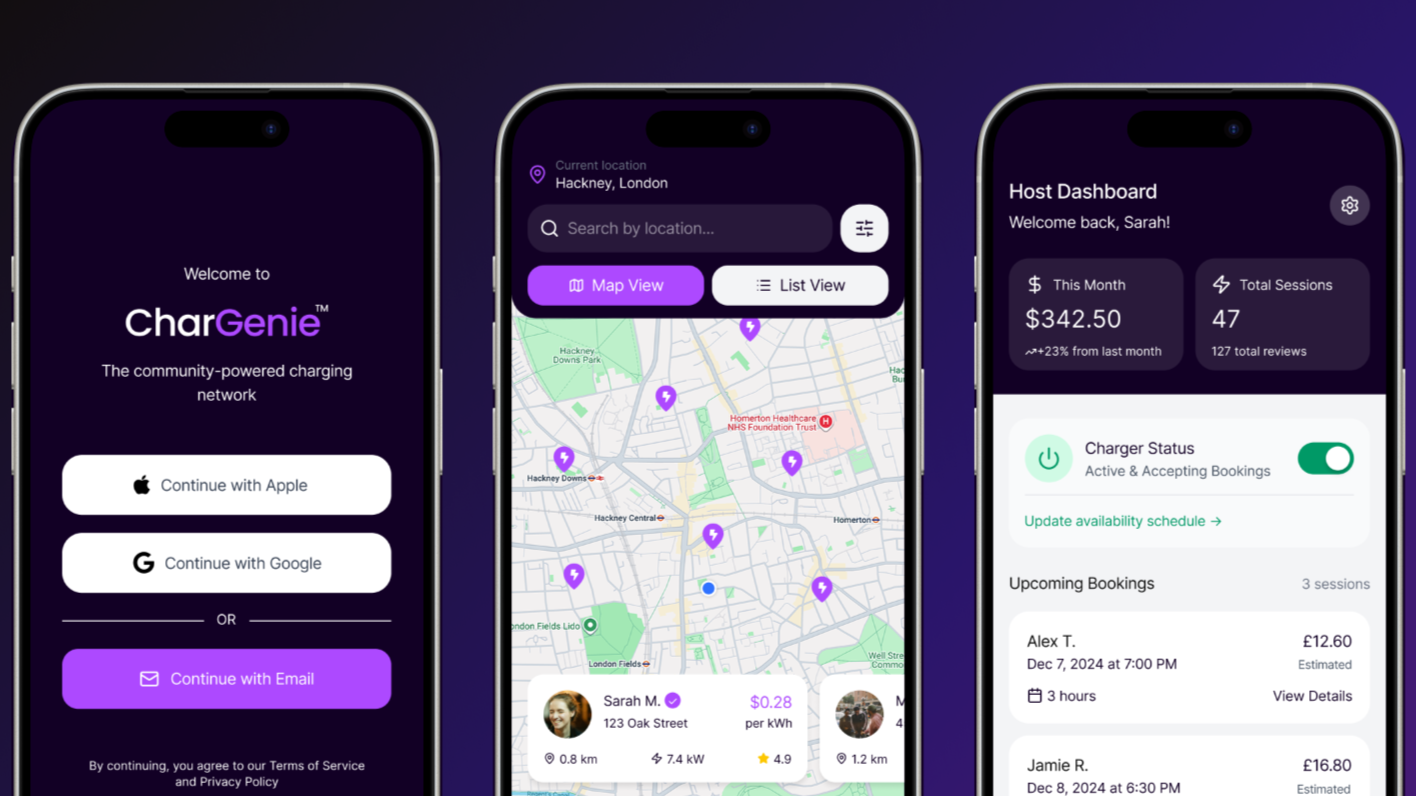
This case study demonstrates my end-to-end product thinking—from problem discovery and user research through to solution design, prioritisation, and delivery planning.
Product Vision
To build the UK’s most trusted, community-powered EV charging network, making charging convenient and affordable for everyone.
-
Despite rapid growth in EV ownership, public charging remains one of the biggest barriers to adoption.
-
CIty EV drivers who rely partially or fully on public charging infrastructure.
-
Reduce friction and uncertainty in public EV charging.
20% of drivers complete a booking in one week
50% of completed bookings convert to a second booking
30% of hosts list their charger after signing up
NPS >30, review average >4.5
-
If we offer EV drivers a cheaper and more convenient alternative to public charging, they will be willing to book home chargers through CharGenie. Success will be validated when early adopters make repeat bookings and report positive satisfaction (NPS > 30).
-
Structured roadmap into discovery, MVP, and iteration phases.
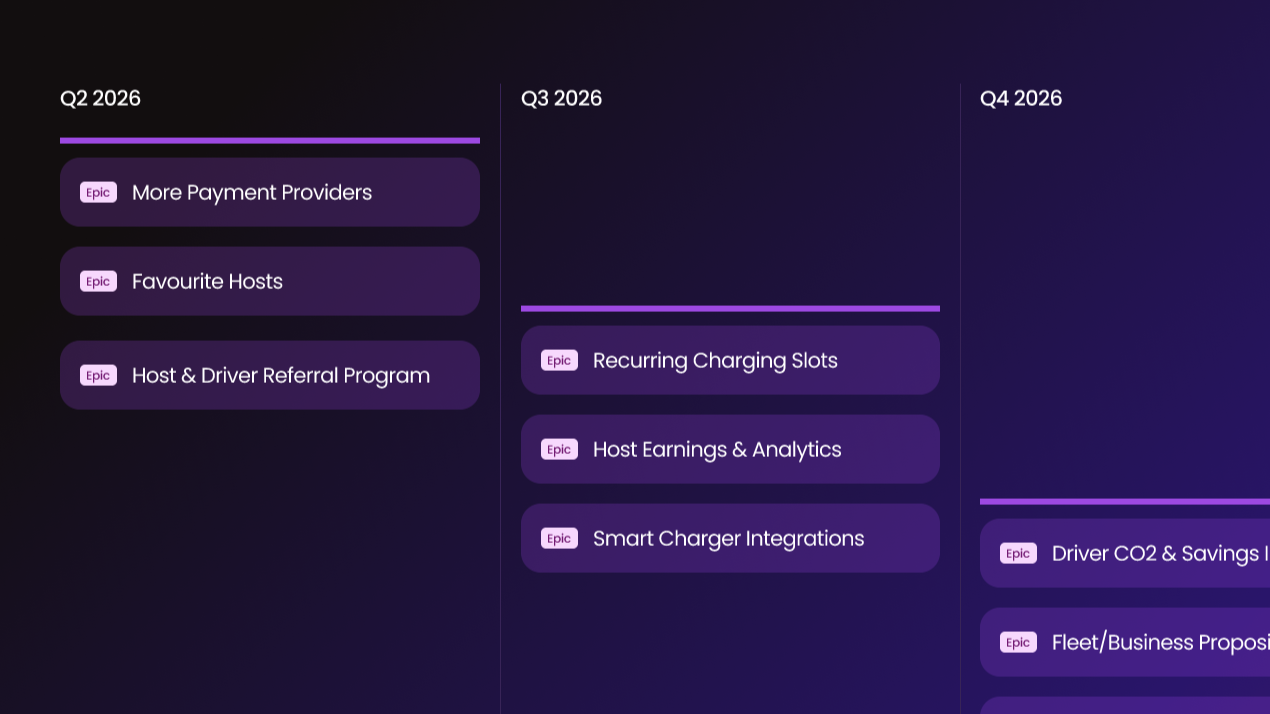
Q2 2026 - More payment providers, favourite hosts, host & driver referral programme.
Q3 2026 - Recurring charging slots, host earning & analytics, smart charger integrations
How I did it.
-

Dream it.
Chargenie started with a simple insight: public EV charging is fragmented, unreliable, and stressful for drivers. The vision was to create a single, trusted experience that gives users clarity and confidence when charging away from home.
-
Build it.
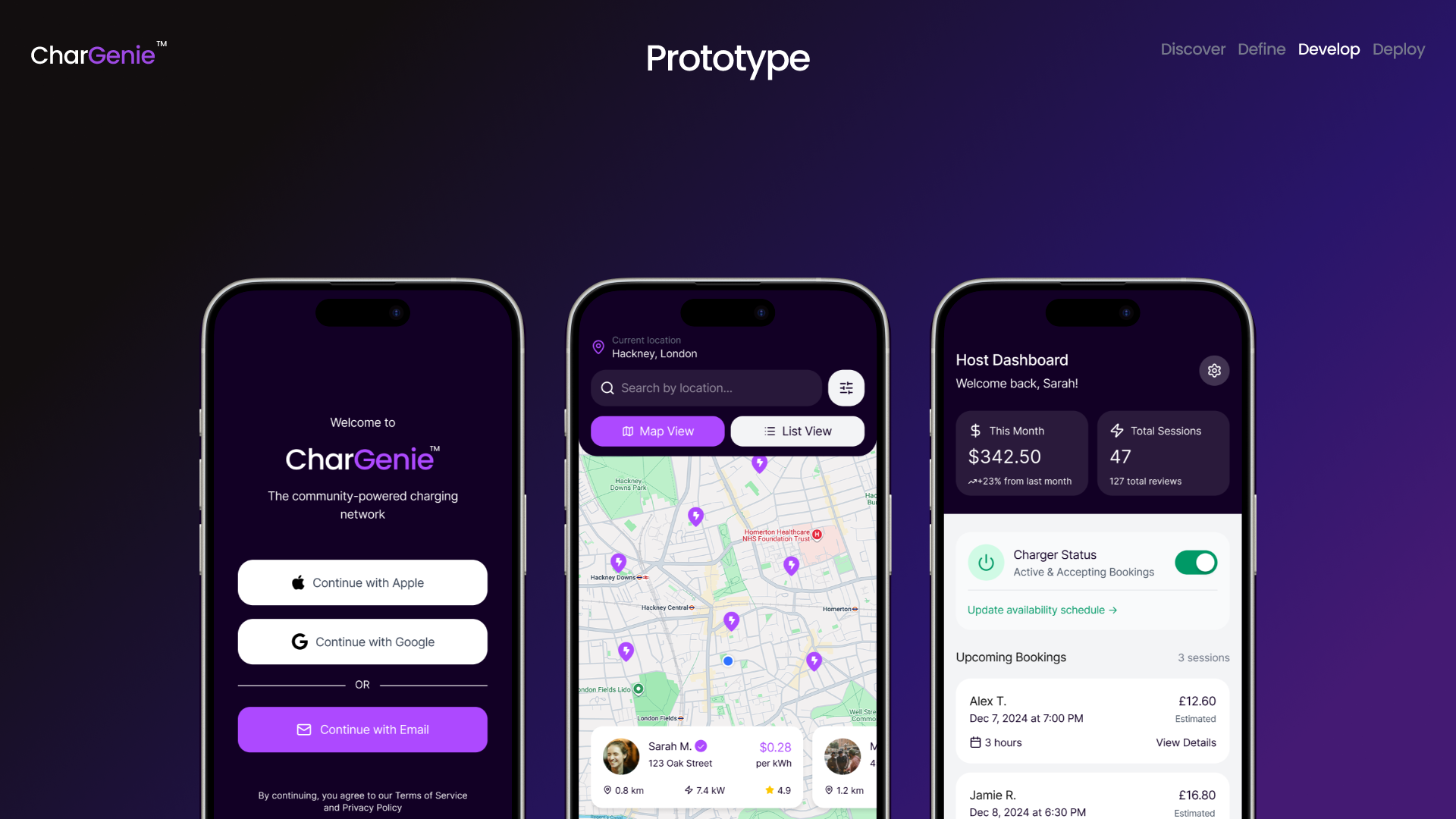
I shaped the vision into a focused MVP, prioritising reliability and transparency over feature breadth.
-
Grow it.
The product roadmap focuses on scaling trust and capability over time, expanding into premium features and journey-based use cases.
Interact with the Chargenie app.
Use the link below to test and provide user feedback for our prototype.
Pitch Deck
Check out our pitch deck for potential Chargenie investors.